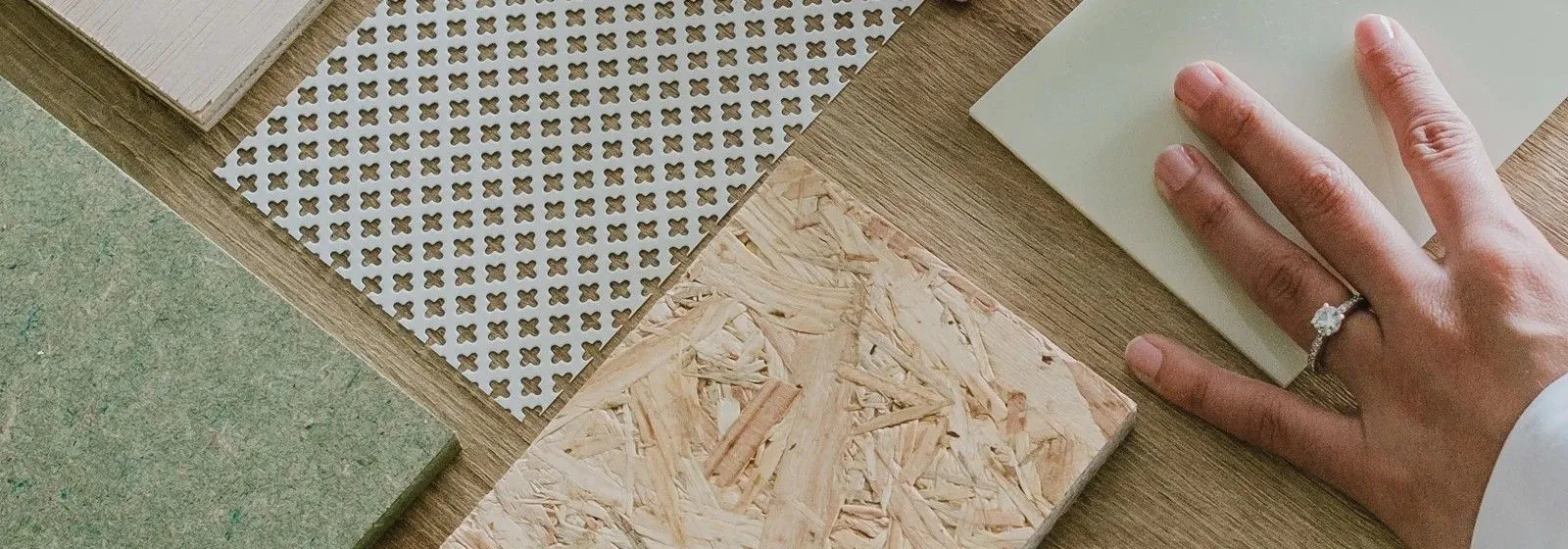
Choose the Right Material from the Start: Built-ins That Last and Stay Beautiful
Interior design cannot be complete without considering the “materials” used in built-ins and furniture. Each material has different properties, affecting aesthetics, durability, and the client’s budget.
As a brand specializing in built-ins, G-CODE Cabinetry pays attention to every step, from design to material selection, to ensure clients get furniture that meets both design and function.
This article will introduce you to the main materials commonly used in built-ins, along with their pros, cons, and professional advice.
1. Solid Wood
Pros:
- Naturally beautiful with unique grain
- Strong, durable, long lifespan
- Can be sanded, refinished, or reused
Cons:
- Expensive
- May expand or contract with weather
- Needs protection from termites and moisture
Best for: Luxury projects such as dining tables, high-end kitchens, or classic-style homes
2. Plywood
Pros:
- Stronger and more flexible than particle board
- Good load-bearing, suitable for structural work
- Usable for both interior and some exterior applications
Cons:
- More expensive than MDF and particle board
- Poor quality plywood may warp or have uneven surfaces
Best for: Furniture frames that need to bear weight, such as wardrobes, lower kitchen cabinets, shelves
3. MDF (Medium Density Fiberboard)
Pros:
- Smooth, consistent surface, easy to cut
- Affordable, suitable for various designs
- Can be painted or laminated/melamine finished smoothly
Cons:
- Not water or moisture resistant
- Less load-bearing than plywood
Best for: Cabinet doors, sink doors, or interior wall panels
4. Particle Board
Pros:
- Cheapest among engineered woods
- Lightweight, suitable for some built-in types
- Can be finished with melamine/laminate in various patterns
Cons:
- Not water resistant, not suitable for wet or humid areas
- Not as strong as MDF or solid wood
Best for: Interior furniture that doesn’t bear much weight, such as wall cabinets, bedside tables
5. HMR (High Moisture Resistant Board)
Pros:
- MDF with enhanced moisture resistance
- Better moisture resistance than regular MDF
- Can be beautifully finished with laminate or melamine
Cons:
- Slightly more expensive than MDF and particle board
- Still not suitable for direct wet areas, e.g., under sinks
Best for: Built-ins in bathrooms, kitchens, or areas near moisture
6. Laminate / Melamine / Real Wood Veneer (Surface Materials)
Surface materials enhance beauty and protect the core wood. Each has different characteristics, such as:
| Type | Properties |
|---|---|
| Melamine | Affordable, scratch-resistant, many patterns |
| Laminate | More durable than melamine, suitable for heavy use |
| Real Wood Veneer | Luxurious natural wood look, more affordable than solid wood |
7. PB MUF (Moisture Resistant Particle Board)
Moisture-resistant particle board, or PB MUF, is an improved version of regular particle board with added moisture-resistant resin (MUF – Melamine Urea Formaldehyde), making it more moisture resistant. It’s suitable for value-focused projects that occasionally face humidity.
Pros:
- Better moisture resistance than regular particle board
- More affordable than HMR or plywood
- Smooth surface, can be finished with melamine/laminate
- Lightweight, easy to install
Cons:
- Moisture resistance is “moderate” but not as high as HMR or plywood
- Not suitable for areas with direct water exposure, e.g., under sinks or bathrooms
Best for: Interior furniture in occasionally humid areas, such as kitchen wall cabinets, shoe cabinets near entrances, or ground floor furniture
🔹 When should you choose PB MUF over HMR or Plywood?
- When you need to control the budget
- Need a material with moderate moisture resistance
- In areas that are not always humid but may be exposed occasionally, e.g., near windows or kitchen walls
“As our standard, we recommend PB MUF for projects that need value but don’t want to compromise too much on quality.”
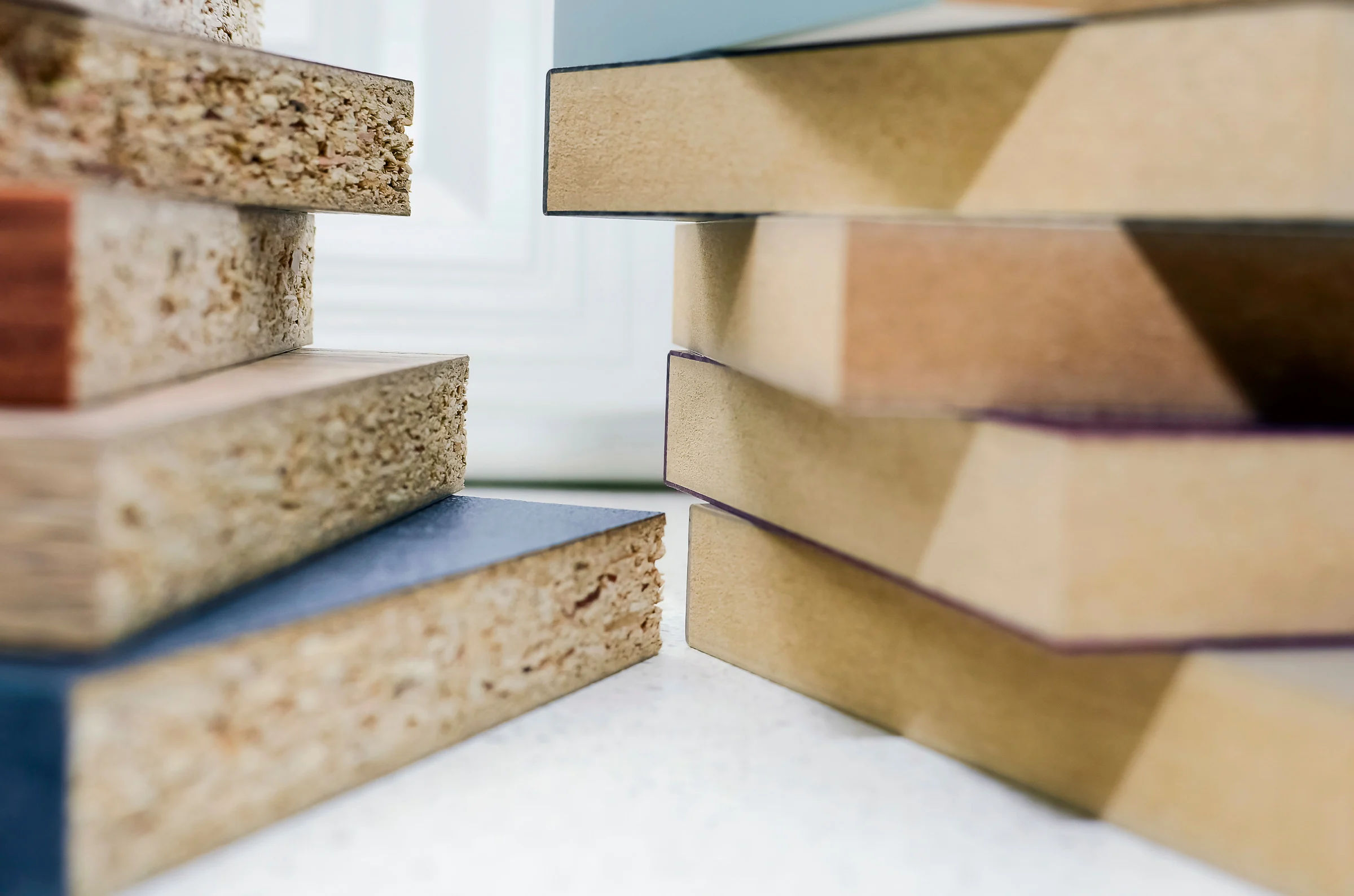 CONCLUSION
Additional Summary
| Material | Key Features | Best For |
|---|---|---|
| PB MUF | Moderate moisture resistance, affordable | Kitchen wall cabinets, ground floor cabinets, furniture near windows |
| HMR | Higher moisture resistance than PB MUF, durable | Kitchens, bathrooms, moisture-prone areas |
| Plywood | Strong, excellent load-bearing | Main cabinet frames, heavy-use areas |
G-CODE Cabinetry pays attention to every material detail so you can be confident your built-ins will be “beautiful, functional, and long-lasting.” Interested in material selection advice? Contact us anytime!
#GCODECabinetry #PBMUF #MoistureResistantMaterial #InteriorDesign #ChooseBuiltInMaterial #DurableBuiltIn